
An epidural steroid injection may be considered for selected patients whose symptoms suggest irritation or inflammation of a spinal nerve, often with pain traveling into a leg. It is not a routine treatment for every backache, and persistent pain alone does not establish that an injection is appropriate.
The decision depends on the diagnosis, examination, relevant imaging, previous treatment, medical risks, and your goals.
At Prestige Pain & Trauma Institute, we evaluate those factors before recommending care. We serve patients in Loma Linda, Rosemead, and Palm Springs, with an emphasis on clear explanations and individualized treatment planning.
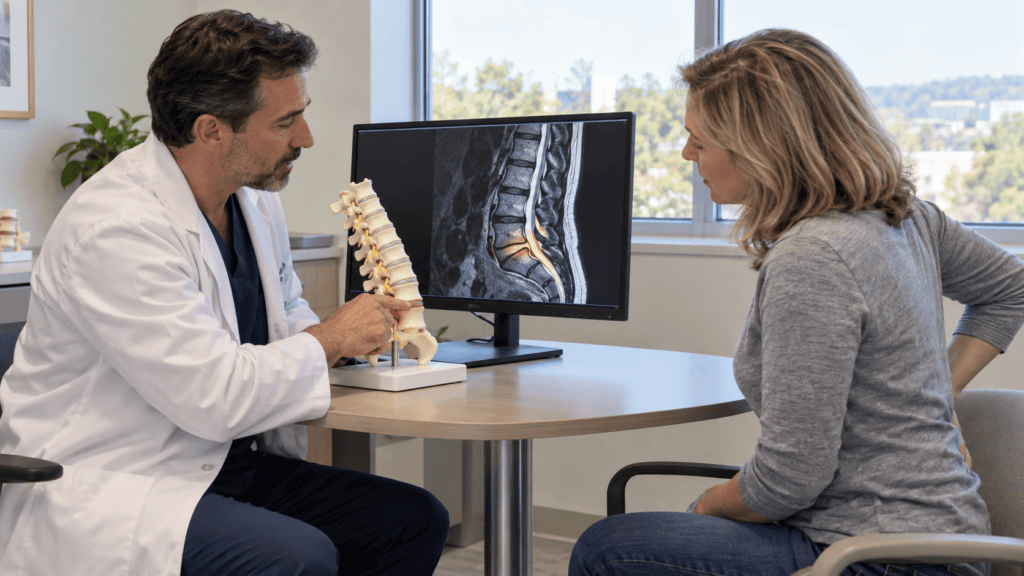
What Is an Epidural Steroid Injection?
An epidural steroid injection places corticosteroid medication into the epidural space around spinal nerve roots. Its purpose is to reduce inflammation that may contribute to nerve-related pain. A local anesthetic may also be used, depending on the technique and treatment plan.
For lower back symptoms, the injection targets the lumbar region. This article discusses therapeutic steroid injections, which differ from epidural anesthesia used during childbirth or surgery.
An injection does not repair a herniated disc, reverse spinal degeneration, or widen a narrowed spinal canal. Relief, when it occurs, may be temporary, and some patients do not benefit.
Which Symptoms May Lead to a Discussion About an Injection?
Pain Traveling Into a Leg
Radiating pain, sometimes described as sciatica, can occur when a lumbar nerve root is irritated or compressed. Symptoms may include shooting or burning leg pain, tingling, or numbness.
A herniated disc is one possible cause. Spinal narrowing and other conditions can also produce nerve-related symptoms.
However, not all leg pain comes from the spine. Hip problems, peripheral nerve conditions, and other causes may require a different approach. An evaluation of low back pain and sciatica helps establish which findings are relevant.
Symptoms That Continue Despite Appropriate Initial Care
An injection may enter the discussion when suitable measures such as guided exercise, physical therapy, activity adjustments, or medication have not provided enough improvement.
There is no universal period of pain that automatically makes someone a candidate. The clinician considers the severity of symptoms, functional limitations, treatment response, and whether the likely pain source could respond to an epidural injection.
Continuing symptoms also do not automatically mean that more procedures are the next step. Sometimes the diagnosis or rehabilitation plan needs reassessment.
What Does the Evidence Say About Benefits?
Benefits depend on the condition being treated. Radicular pain and spinal stenosis should not be presented as having identical evidence.
The American Academy of Neurology’s 2025 systematic review found limited benefits for radiculopathy, largely in the short term. Radiculopathy involves a problem affecting a spinal nerve root.
For lumbar spinal stenosis, the review found that injections might modestly improve disability, meaning limitations in daily functioning, but probably do not reduce short-term pain. Evidence was insufficient to determine long-term pain benefits.
These findings support a careful discussion rather than a promise of relief. Ask which outcome is realistic for your condition and how improvement would be measured.
Possible goals might include walking more comfortably or participating in rehabilitation. An injection should have a defined purpose within the broader care plan.
When Might an Epidural Injection Be Less Suitable?
Pain limited to the lower back, without findings suggesting nerve-root involvement, may arise from muscles, joints, or other structures. An epidural injection may be less relevant when those structures are the main pain source.
An unclear diagnosis can also be a reason to investigate further before choosing a procedure. An MRI finding alone does not establish that a particular structure is causing the symptoms.
Other concerns may require postponing or changing the plan. These include active infection, certain bleeding problems, medication or contrast allergies, and anatomical findings that affect safe access.
New or progressive neurological symptoms may require urgent assessment or surgical evaluation instead of proceeding with a routine injection.
How Does the Specialist Evaluate Candidacy?
History and Examination
We review where the pain begins, where it travels, what aggravates it, and how it affects your activities. The examination may assess movement, strength, sensation, and reflexes.
Previous treatments, procedures, surgery, and medical conditions provide additional context. Bring relevant records and explain what helped, what did not, and any adverse reactions.
Our new patient information can help you prepare for that conversation.
Imaging Before and During the Procedure
Not every initial back-pain consultation requires a new MRI. When an injection is being planned, the clinician reviews appropriate imaging and determines whether further studies are needed to assess anatomy, the suspected pain source, and procedural risks.
Imaging guidance during the injection serves a different purpose. Fluoroscopy, which uses X-ray images, helps guide needle placement. Contrast is typically used to assess spread and identify unintended placement before medication is delivered.
These measures support procedural planning and risk reduction, but they do not eliminate every complication.
Medication and Health Review
Tell the team about all prescriptions, over-the-counter medicines, supplements, allergies, recent infections, diabetes, and possible pregnancy.
Blood-thinning medicines require individualized planning. Do not stop them independently. Decisions about continuing or temporarily withholding them should involve the procedural team and the prescribing clinician.
If you have diabetes, ask how steroid-related blood glucose changes will be monitored and managed.
What Risks Should Be Discussed?
Possible effects include temporary soreness, a short-term pain increase, flushing, headache, or changes in blood glucose. Other risks include infection, bleeding, allergic reactions, dural puncture, and nerve injury.
Rare serious neurological complications have been reported, including stroke, paralysis, vision loss, and death. Risk varies with the approach, medication, anatomy, and individual health factors.
Corticosteroids are used off-label for epidural administration, meaning the FDA has not approved these medicines for that route. Your clinician should explain the rationale, alternatives, and risks as part of informed consent.
Ask about the specific technique being proposed rather than assuming every epidural injection has the same risk profile.
What Should You Expect Around the Procedure?
Ask how the area will be numbed and what sensations to expect. Pressure or discomfort may occur, and you should tell the clinician about unexpected symptoms during the procedure.
Preparation instructions may address eating, drinking, medicines, and transportation. Follow the instructions provided for your procedure rather than applying another patient’s directions.
Afterward, you should receive guidance about activity, medications, expected effects, and symptoms requiring urgent attention. Ask whom to contact if you have a concern.
Follow-up should assess pain, function, side effects, and whether the treatment helped the agreed goals. Repeat injections should not be an automatic series. The decision requires reassessment of response, risks, and alternatives.
What If an Injection Is Not the Right Option?
Other care may include rehabilitation, medication adjustments, activity guidance, or treatment directed at a different pain source.
Our pain treatment options include approaches selected according to the diagnosis. We may coordinate with physical therapists, surgeons, or other clinicians when appropriate.
Physical therapy and guided exercise are rehabilitation options, rather than interchangeable substitutes for every injection. Likewise, another procedure is useful only when it matches the suspected cause.
For some patients, specialist or surgical assessment is appropriate, particularly when neurological findings or structural problems require it. An injection should not delay evaluation of a condition needing a different level of care.
When Should Back Pain Receive Urgent Attention?
Seek emergency medical care for back pain accompanied by new difficulty urinating, loss of bladder or bowel control, numbness around the groin or saddle area, or rapidly progressing leg weakness.
These symptoms can indicate a serious neurological problem. Do not wait for a routine pain-management appointment.
Fever with significant illness, severe pain after major trauma, or new or worsening back pain in someone with a cancer history also warrants prompt medical assessment.
Questions to Bring to Your Appointment
Before deciding, ask:
- What findings suggest that my pain involves a spinal nerve?
- What benefit is realistic for my diagnosis?
- Why is this approach being considered over other options?
- What risks are relevant to my health and medications?
- How will we assess the result and decide what comes next?
You should understand the proposed treatment well enough to discuss your preferences and concerns.
Discuss Your Options With Prestige Pain & Trauma Institute
Choosing an epidural injection starts with understanding the likely pain source and weighing potential benefits against risks.
At Prestige Pain & Trauma Institute, we explain the findings, available approaches, and goals of care. Recommendations are tailored to your symptoms, history, and functional needs.
Request a Pain Management Evaluation to discuss whether an epidural injection or another approach may be appropriate for you.


